Engineered Western Red Cedar
Engineered tongue-and-groove
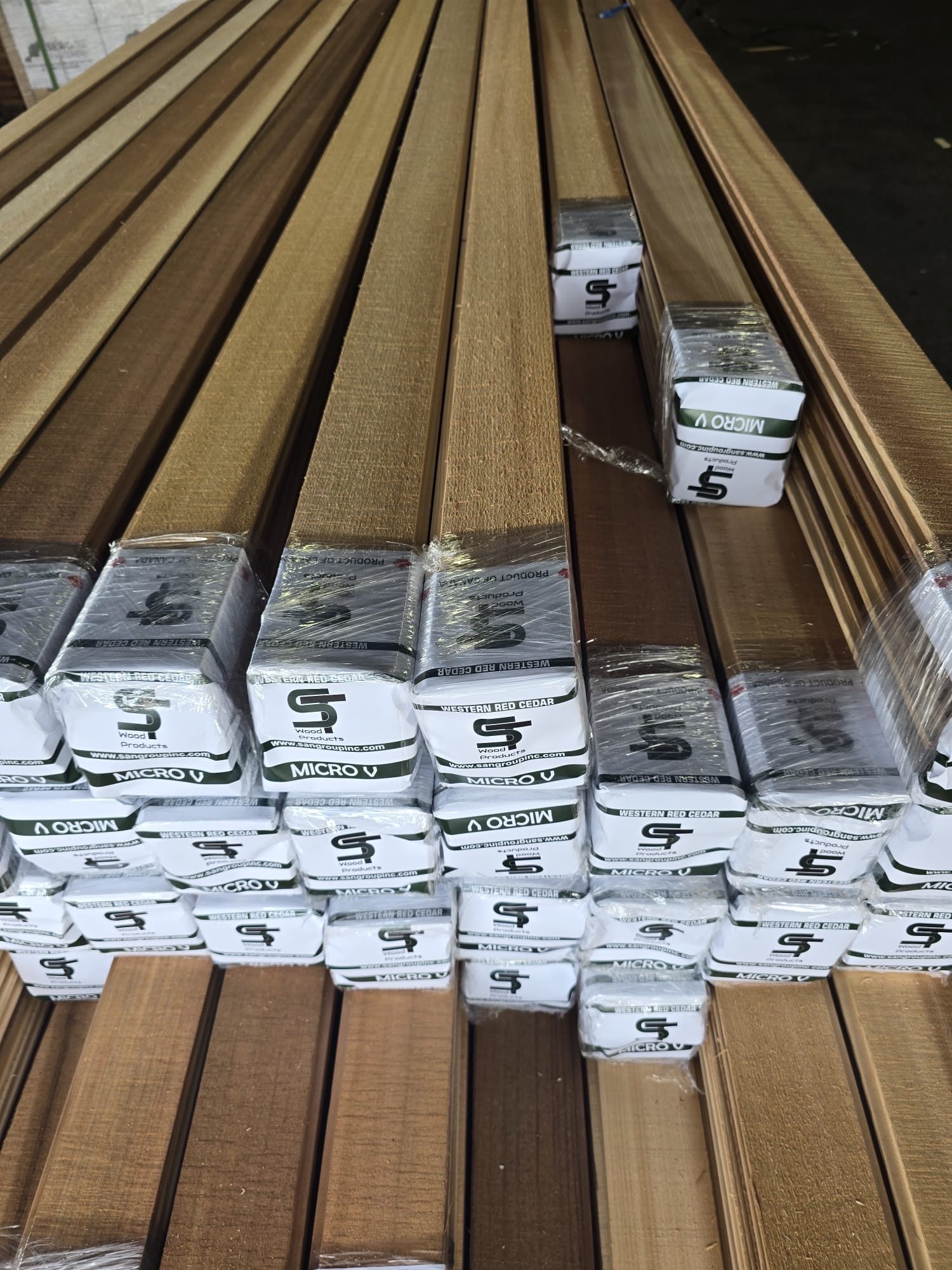
A clear vertical-grain cedar face laminated over a finger-jointed core. Made in Parksville, BC by ST Wood Products. Sold in two face profiles: Fineline and Micro V.
- Clear VG cedar face
- Finger-jointed core
- Kiln dried
- Exterior adhesive
- Fineline or Micro V
Construction
How it is built
The board is a laminate of three parts: a clear cedar face, an exterior-grade adhesive layer and a finger-jointed softwood core. The blank is then milled to the tongue-and-groove profile, so the joint is cut through the whole laminate.
Join the three layers, or separate them again.
- 1Clear vertical-grain Western Red Cedar face
- 2Exterior-grade adhesive
- 3Finger-jointed, kiln-dried backer core
- 4T&G profile milled through the laminate
Exploded view of one board. Not to scale; layer thicknesses are schematic. The shallow V-joint chamfer on the tongue edge is drawn as on the Micro V profile.
The face
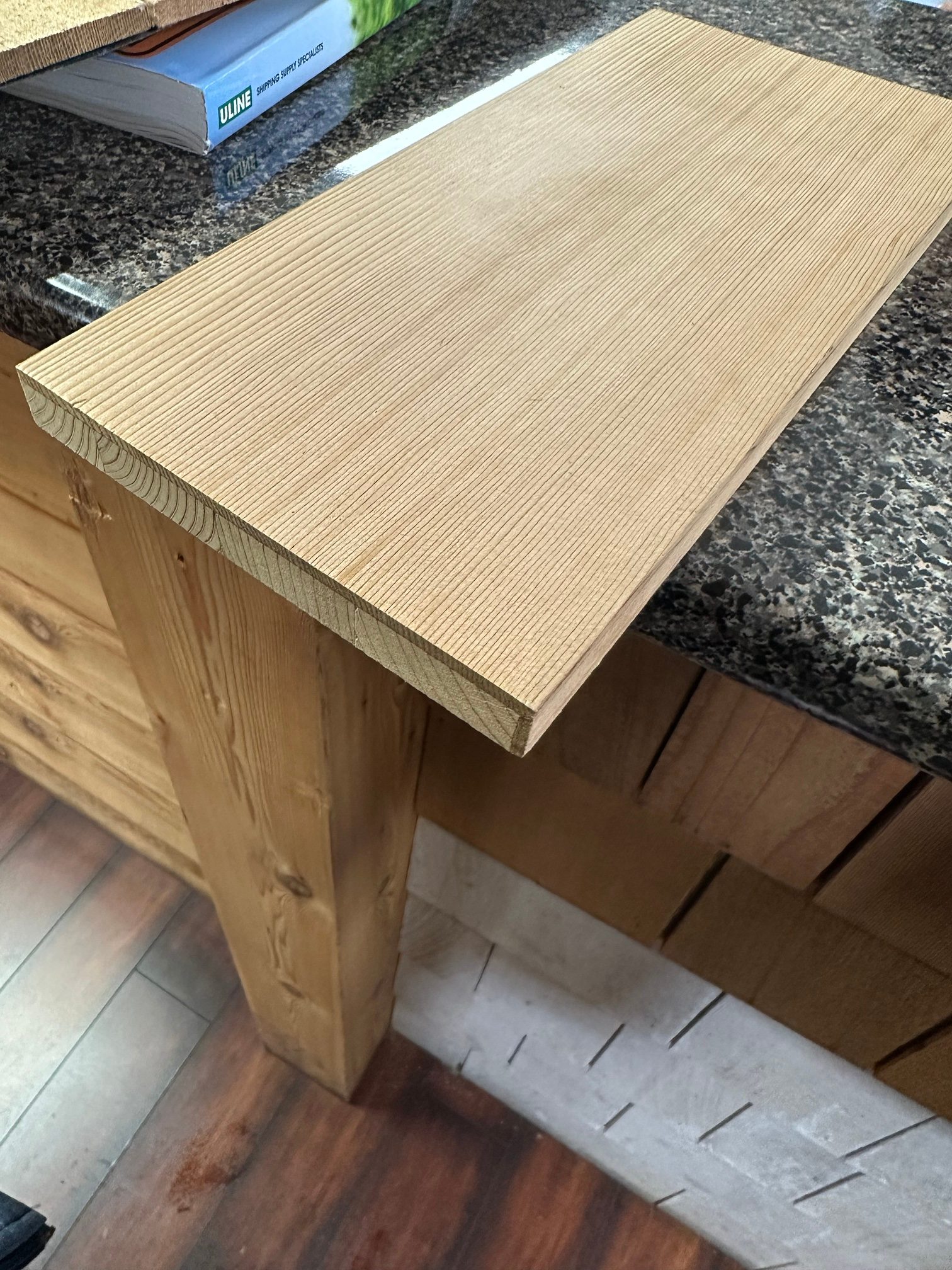
A clear, vertical-grain Western Red Cedar veneer. It is the only species Aquila offers in engineered T&G. Clear cedar is used only where it is seen.
The core
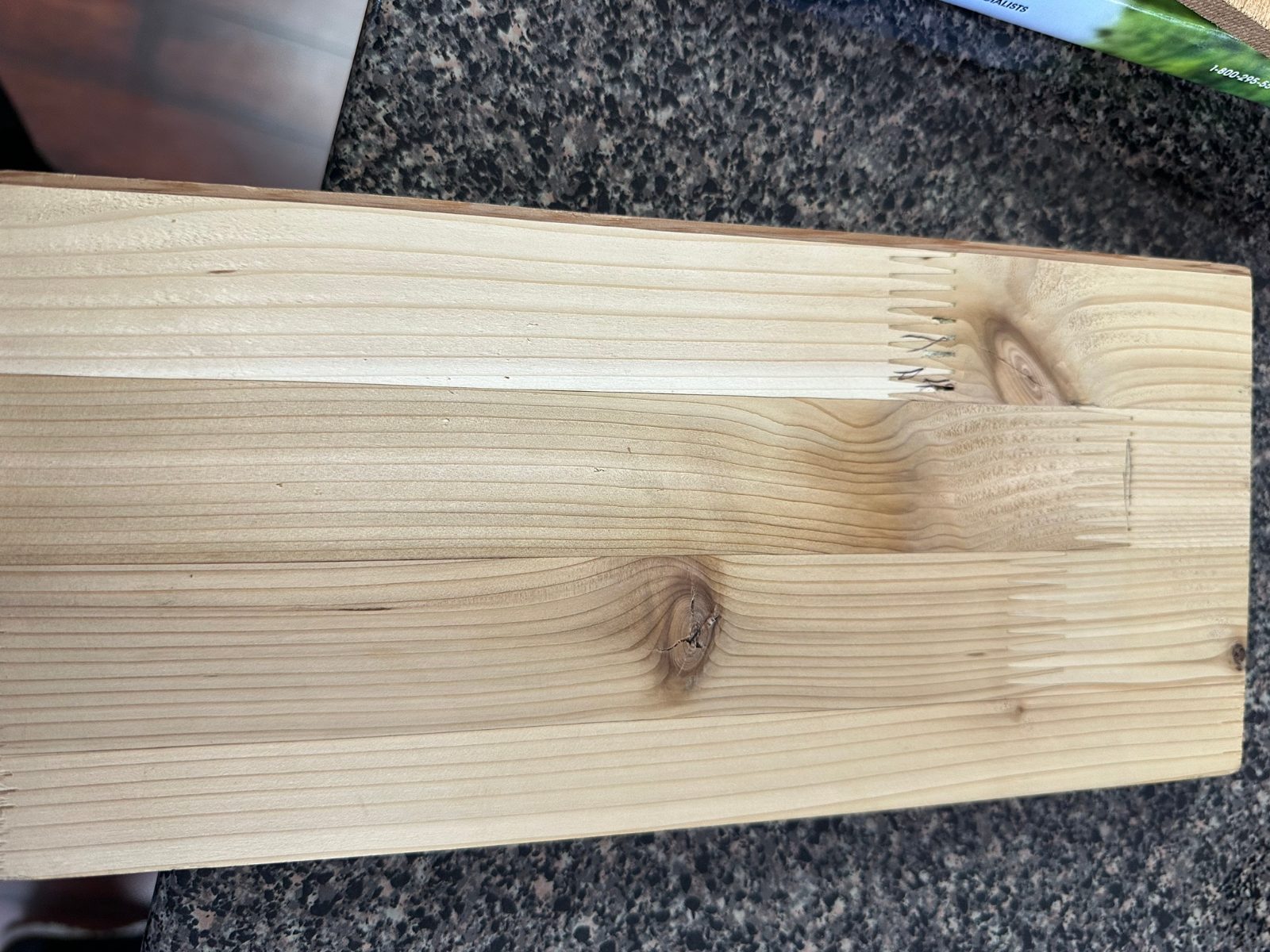
Kiln-dried softwood, finger-jointed from shorter lengths. Lower-grade and short fibre goes here, where it is not visible.
The profile
After lamination the blank is milled to the Fineline (fine-line flush face) or Micro V (micro V-joint) profile, so the tongue and groove run through face, adhesive and core together.
Clear VG face
Finger-jointed core
Performance
Why engineered cedar stays flat
Solid flat-sawn boards move unevenly across their width as moisture changes, and the movement shows up as cupping. Cupped boards open the joint and let water in. The engineered board is built to move less, and to hold what movement remains in check.
The laminate stays flat through wet and dry cycles, so the T&G joint stays closed. Cedar's natural extractives resist decay. Finish with a breathable stain such as Sansin or similar, or leave the cedar to weather.
End-grain view, schematic. The cup is exaggerated for clarity.
Five reasons it performs better than solid T&G
- No continuous plane of weaknessThe finger-jointed core has no single long grain line. Short sections with alternating grain counter each other instead of pulling the board into a cup.
- Vertical-grain faceEdge grain moves about half as much across the width as flat grain, and the core restrains it.
- Kiln dried before laminationBoth layers are dried before they are bonded, so the board is at equilibrium when installed.
- Clear face, no knotsThere is nothing to loosen, bleed or check, and lengths run long without defects.
- Less clear cedar per boardLower-grade and short fibre goes into the core, so the same log supply gives more clear coverage than solid clear T&G.
Specifications
Fineline and Micro V
Engineered WRC T&G is sold in two face profiles. Both are Western Red Cedar, and the pack labels show 1 x 6.
- Fineline
- Fine-line flush face. Packs are labelled ST Wood Products, Fineline Engineered, Western Red Cedar, 1 x 6.
- Micro V
- Micro V-joint face. Packs are labelled Micro V Engineered, Western Red Cedar.
| Item | Specification |
|---|---|
| Nominal sizes | 1 x 6 (shown on pack labels); 1 x 4 and 1 x 8 typical |
| Finished thickness and face width | See stock list |
| Face profiles | Fineline (fine-line flush face); Micro V (micro V-joint) |
| Surface | Smooth, or one face resawn |
| Lengths | 1–2 ft shorts through 20 ft; specified or random lengths on request |
| Grade | Clear face, finger-jointed core |
| Moisture | Kiln dried |
| Finish | Natural, or primed/colour-ready on request |
Typical profiles only. Confirm sizes and availability against the dealer stock list.
- Face
- Clear vertical-grain Western Red Cedar
- Core
- Finger-jointed, kiln-dried softwood backer
- Adhesive
- Exterior grade
- Moisture
- Kiln dried before lamination
- Finish
- Natural, or breathable stain such as Sansin
- Origin
- Parksville, BC. PEFC chain of custody PEFC/26-31-238 (ST Wood Products).
Applications
Where it is used
| Use | Notes |
|---|---|
| Exterior soffits and ceilings | Soffits, porch ceilings and covered ceilings where a closed joint matters. |
| Cladding and feature walls | Exterior cladding, and interior ceilings and feature walls, in Fineline or Micro V profile. |
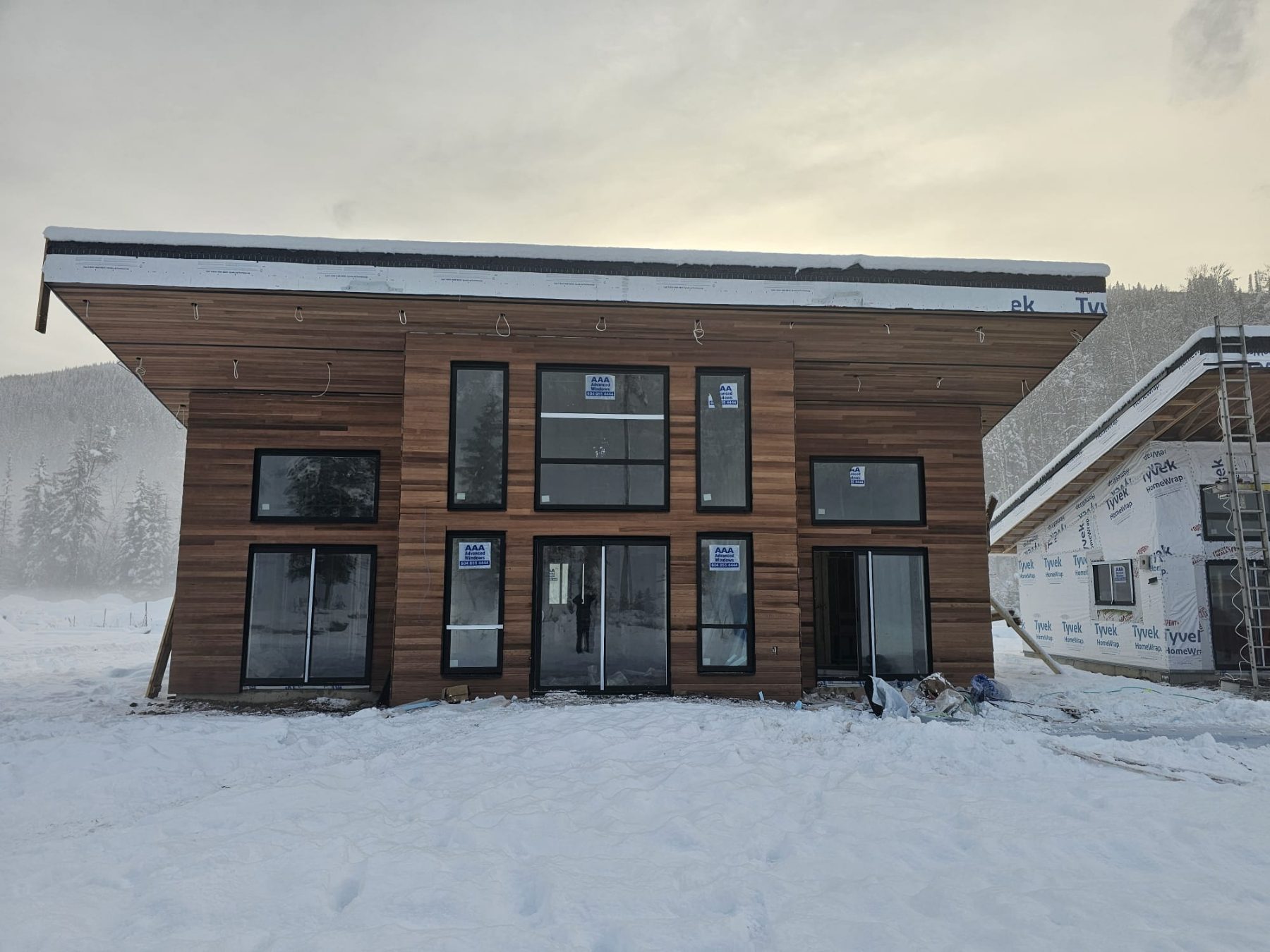
| Project Golden | Mountain cabins in BC's interior finished in clear engineered cedar T&G, thermally treated hemlock and engineered bevel siding. The cladding has been proven through BC northern winters. |
Installation
Installation notes
Standard practice for tongue-and-groove. Follow the project specification and local code where they differ.
Store flat and dry
Keep bundles flat and covered on site until installation.
Seal cut ends
Back-prime or seal cut ends before the board goes up.
Blind nail
Fasten through the tongue with stainless or hot-dipped galvanized fasteners.
Leave an end gap
Leave an expansion gap at the ends of each run.
Ventilate
Provide ventilation behind exterior cladding.
Availability
Stocked and made to order in Parksville
Dealer pricing, stock lists and spec sheets are available on request.
Cam Miller, Wholesale Sales
(250) 412-6970 ext. 106
cam@aquilabuildingsupplies.com